發布日期:2007-10-01更新日期:2007-10-01
Patterns of a Colorful Life ─ The Mosaic Art of the Women in Hong Mao Gang Community
A very special mosaic art exhibition was held in the Kaohsiung Pier-2 Art District in September, 2007. The vibrant colors of these beautiful mosaic tesserae (tiles) make up various lively pictures that lit up the whole exhibition space. The most wonderful thing about this exhibition is that the amazing art pieces were created by Hong Mao Gang Mosaic Studio, in which most of the artists are local women from Hong Mao Kang Community of Kaohsiung City.
Hong Mao Gang Mosaic Studio was established by the Hong Mao Gang Culture Association of Kaohsiung City. Professor Yi-Hsiung Li, the head of NKNU Visual Design Department, is the studio's project director. Professor Li says that since 1967 Hong Mao Gang village has been included in the Container Terminal Project, which was the city's long-term development project for the harbor area, the government issued a relocation plan and no new buildings in the village have been built. This has caused most of the residents to gradually move out to other cities. The remaining villagers now rely on aquaculture and offshore fisheries. However, these two main industries are also phasing out. Therefore, the original aquaculture skills the villagers possess may become useless after they are relocated.
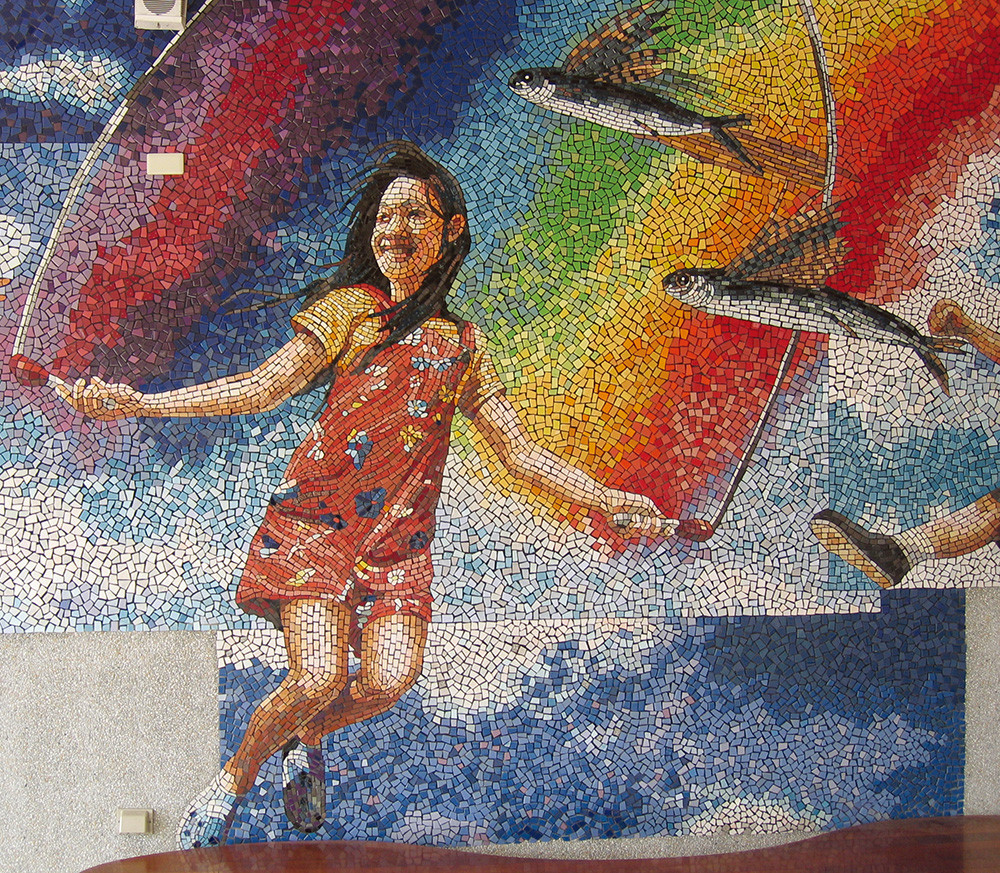
The studio was established based on the background mentioned above. Prof. Li who is also a Hong Mao Village resident, is passionate about using his profession to help his fellow villagers and create more employment opportunities for them. Prof. Li once Followed Shui-Long Yen, one of the Most prominent Taiwanese artists, to study mosaic art. He wishes through developing this highly labor intensive art industry, to provide alternate choices and opportunities for the Hong Mao villagers.
The Hong Mao Gang Mosaic Studio was established in 2004. Prof. Li, together with the students and faculties of NKNU Fine Art and Visual Design Departments, are in charge of the management and design lines. The women from Hong Mao Gang Community are on the production lines making the art pieces. It is a difficult skill to learn how to create a mosaic art piece. The project manager of the studio, Hui-Ju Yang said that every operating artist has to undertake more than 6 months of training in basic aesthetics such as chromatics and sketch drawing, before starting to put the tesserae together. Each one of the tesserae is hand cut and trimmed. It takes tremendous patience when creating a piece of mosaic work.
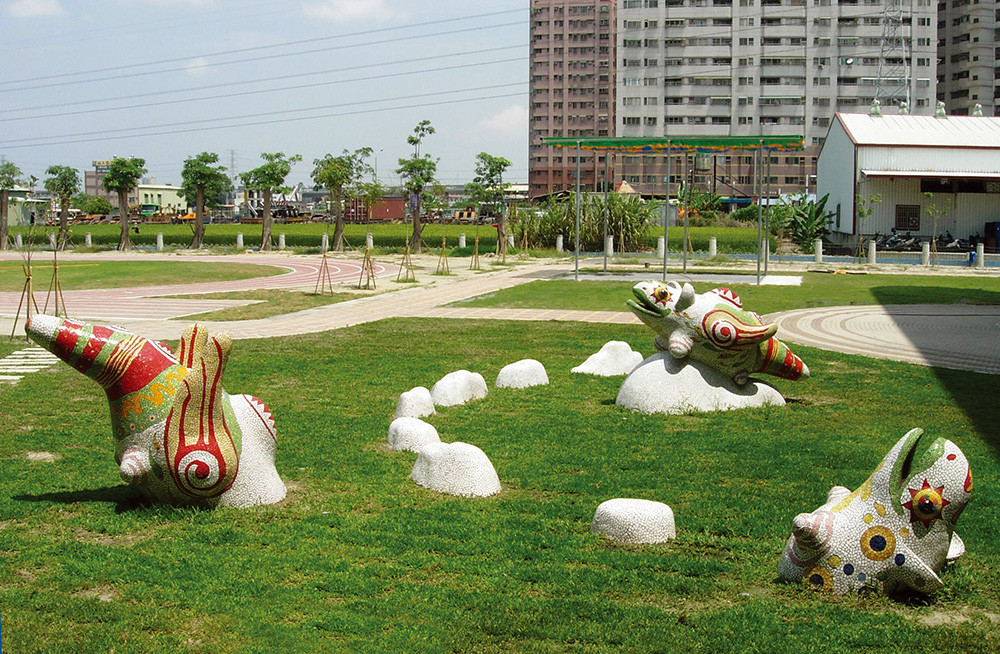
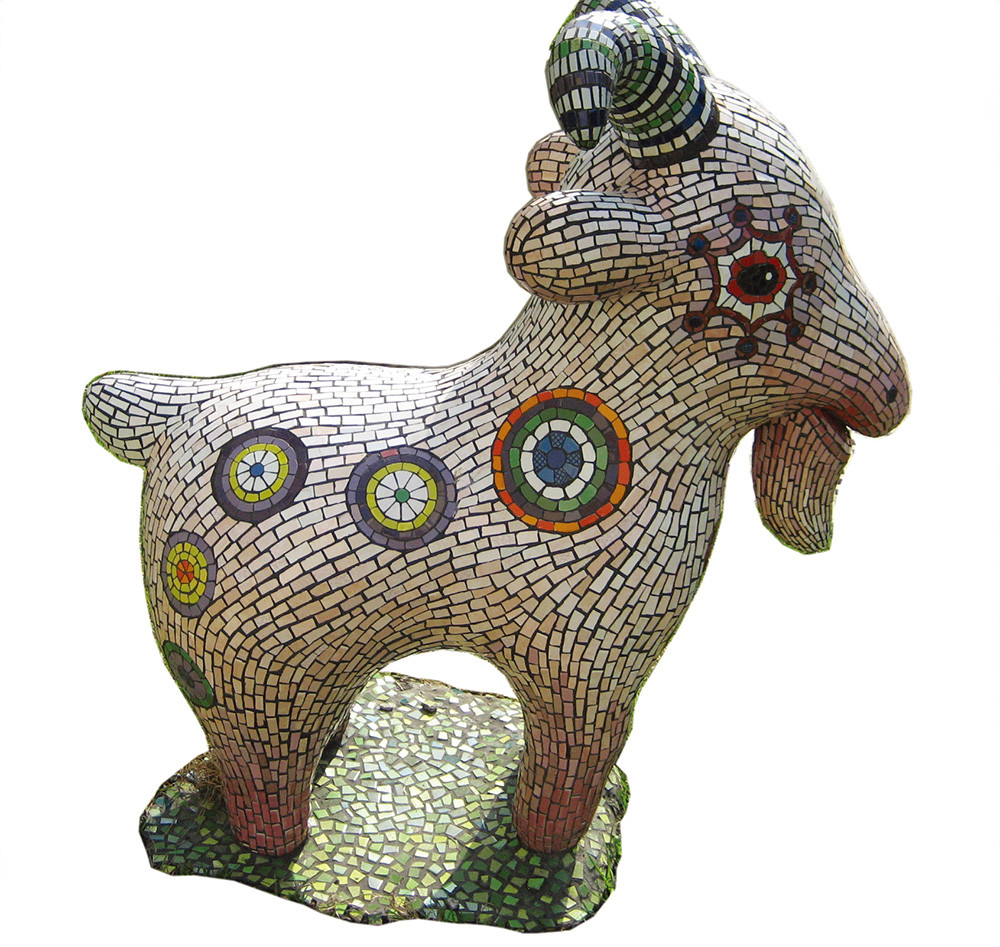
In the past 3 years, the studio has produced many public art pieces, high in both quality and quantity. The most well known work is the "Eco-Paradise" displayed in Cijin Wind-power Park. It includes mosaic works of fiddler crabs, seashells, and mudskippers. The work has really lightened up the seashore. Their work can also be found on the campuses of Kaohsiung City Ming Yi Elementary, Sin Guang Elementary, Shin Guang Elementary, Euoying Senior High, and more which has added color to many pupils' school days.
The Hong Mao Gang Mosaic Studio is the only professional public mosaic art team in Taiwan. The most precious thing is that this is a full time job for the women from the village. For some families, it is a way to bring in some extra money, however, for other families it has become the main income until other family members find other jobs. It is also a new work skill developed for those living in the community. As for the future of the studio, Prof. Li plans to continue bidding for public projects. He also hopes to replace the traditional fresco decoration in the relocated Hong Mao Gang temples with mosaic art. He hopes the mosaic art industry can set up a good foundation for the community.
拼出彩色人生 紅毛港社區婦女的馬賽克鑲崁藝術
◎文/林昀熹 ◎圖片提供/紅毛港馬賽克鑲嵌工作室
今(2007)年九月在高雄駁二藝術特區舉行了一項獨特的馬賽克鑲嵌藝術展,繽紛而鮮豔的馬賽克磚讓整個空間跳躍活潑了起來,而這些數以千計的彩色小磚塊,又排列成各式各樣生動的圖案,令人嘖嘖稱奇。但最令人意想不到的是,這些精巧的馬賽克作品,竟都是出自「紅毛港馬賽克鑲嵌工作室」十幾位社區婦女之手!
「紅毛港馬賽克鑲嵌工作室」是由高雄市紅毛港文化協會所成立。工作室的計畫主持人、也是高雄師範大學視覺設計系主任李億勳教授表示,紅毛港地區在1967年開始被規劃為貨櫃中心而實施禁建遷村,社區居民陸續移居外地,留下來的居民主要賴以維生的近海與養殖漁業又逐漸蕭條,遷村後村民原有的養殖技能更是無用武之地。
在這樣的背景下,本身就是紅毛港人的李億勳老師,李教授也希望藉由自己的藝術專長,幫助當地居民獲得工作機會,加上李教授曾隨顏水龍老師學習馬賽克藝術,因此希望藉由高度勞力密集的馬賽克鑲嵌藝術,提供紅毛港居民對未來多一種選擇與機會。
「紅毛港馬賽克鑲嵌工作室」成立於2004年,由李億勳教授與高師大美術系、視覺設計系的師生經營與設計,紅毛港的社區婦女擔任專業操作員負責製作。要學會製作馬賽克藝術品可不是件容易的事,工作室專案經理楊慧如說,每位加入工作室的操作員都要經過半年以上色彩學、素描等基本美學課程的訓練,然後才能漸漸參與製作和施工,而每一塊馬賽克瓷磚也都需要一一手工剪裁,過程需要相當大的耐心。
三年來,工作室的公共藝術作品質量皆豐富,最為高雄人熟悉的大概就屬旗津風車公園裡的「生態樂園」─馬賽克招潮蟹、貝殼與彈塗魚,讓旗津海邊頓時生動了起來;而高雄市明義國小、新莊國小、新光國小、左營高中等校園中,也可見紅毛港馬賽克鑲嵌工作室的作品,為學童帶來色彩繽紛的校園生活。
紅毛港馬賽克鑲嵌工作室儼然已經成為國內獨一無二的馬賽克公共藝術專業團隊,更可貴的是,這份每天固定上下班的工作,不但讓紅毛港社區婦女貼補家用,甚至在家庭成員還沒找到新工作以前,還成了家裡的主要收入來源,成為社區民眾新的謀生技能。李億勳教授計畫未來除了繼續爭取各項公共藝術的設計製作,也希望能在從紅毛港遷出的廟宇中以馬賽克取代傳統壁畫,希望能為紅毛港居民的未來打下長遠的良好基礎。