發布日期:2009-05-01更新日期:2009-05-01
Fragmented Ceramic Artisan Introducing Jin-Sheng Huang
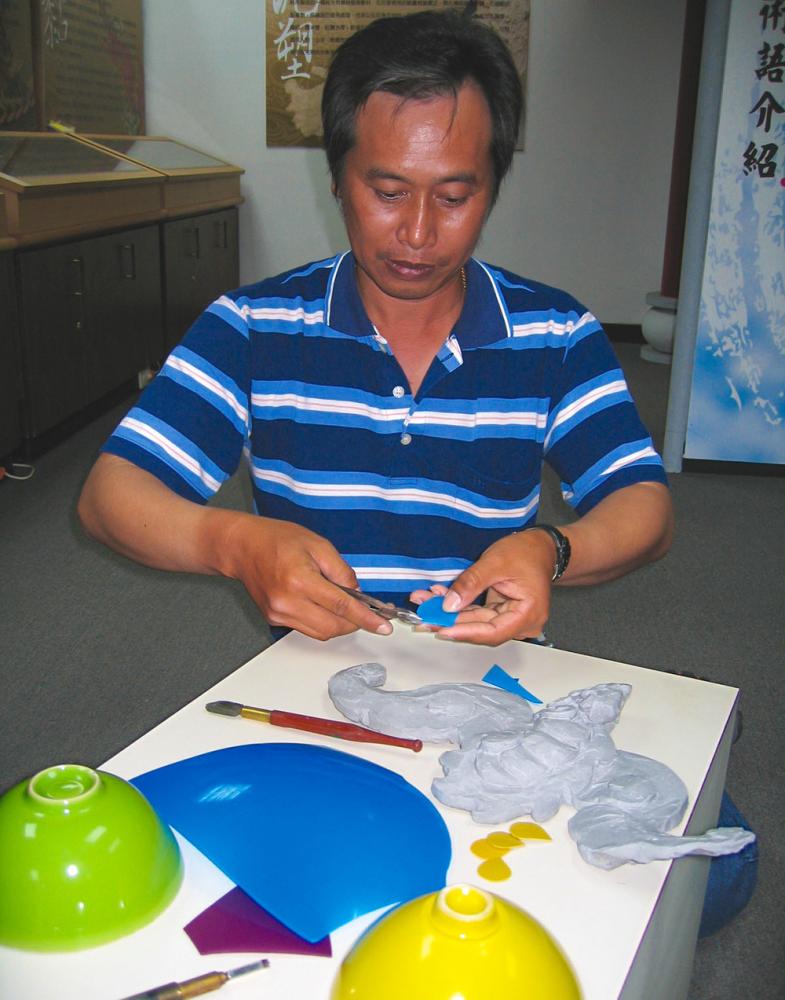
Fragmented ceramic art is, essentially, an art form of "cut-and-paste" that requires the combined the skills of sculpturing, mosaic, and painting. Using colorful ceramic fragments, sometimes from broken bowls or vases, beautiful temple rooftop ornaments in the shapes of birds and beasts, noble lords and majestic generals depicted in classic Chinese novels such as <> and <> all come to life in the capable hands of the artisan.
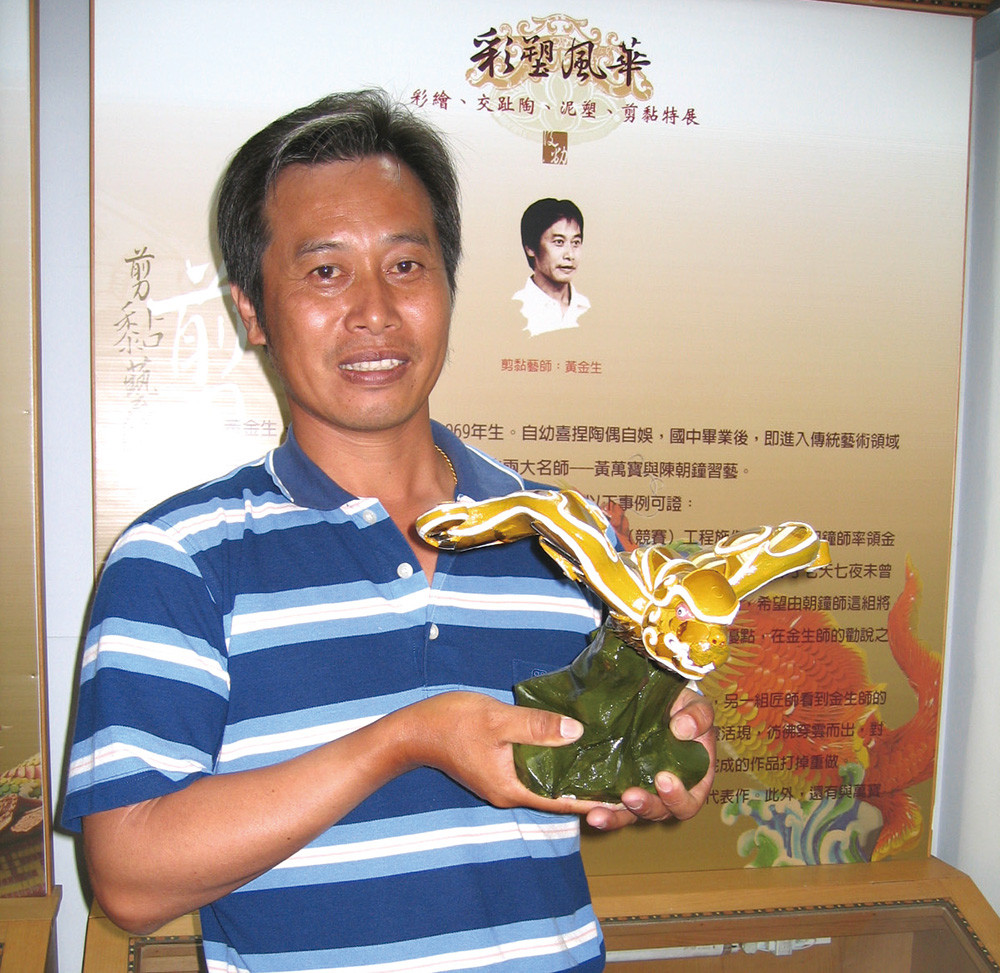
Jin-Sheng Huang was born in Kaohsiung County's Lujhu Township. At a mere forty years of age, he is one of the few artisans certified by the Ministry of Interior Affairs for preservation and restoration of historical monuments and buildings. When he was a child, his favorite activity was ceramic making. His talent did not pass unnoticed by his neighbor, who happened to be famed fragmented ceramic artisan, Wan-Bao Huang. Later on, he also had an opportunity to apprentice under Chao-Chung Chen, another master of the art. Trained under two masters, who were, respectively the leaders of the southern and northern schools of fragmented ceramic art, he became a master in his own right after spending more than twenty years horning his skills. Today, he is known as one of the best fragmented ceramic artisans in Taiwan.
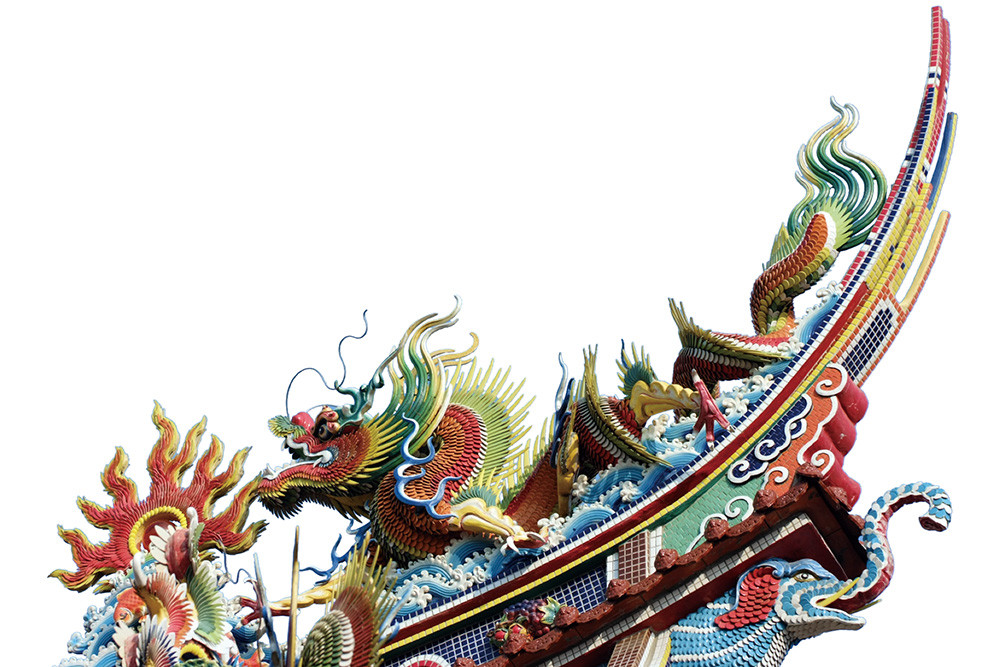
Jin-Sheng Huang's place of work is always on the rooftop of a temple. With his nimble fingers, he creates animals such as tigers, leopards, lions, elephants, or mythical creatures such as chilin, dragon and phoenix. Each of them has been given unique characteristics that make them vividly alive. When he creates human characters, he is able to make nobles appear gentle and polite, generals brave and imposing. His masterful skills are also shown in the harmonious color combination in his work. The details in his work always impress those who have the chance to see it.
If one must name one place as Jin-Sheng Huang's masterpiece, it would be the Chin-Yun Temple located in Kaohsiung City's Gushan District. He was the only artisan involved in the design and production of the construction of Chin-Yun Temple. The design was constantly revised and modified, and it took him more than two hundred working days to complete the project, but the end result is a temple entirely decorated with his signature style. It is the best performance of his twenty-five years of creativity, and it proved, once again, that he is the "top" man of this trade.
When he works, Jin-Sheng Huang sometimes forgets his physical needs. His longest record at work was seven consecutive days without sleep. Because of the frequency of his extended hours at work, his eyesight suffered, but the pain did not slow him down. Since he works outside, he is constantly subjected to natural elements, but he thinks of them as minor inconveniences and continues to give his best to the next piece of his beloved fragmented ceramic art. As he watches his works take shape and earn praises and recognitions, all hardships have been forgotten.
In the earliest days, fragmented ceramic art used mostly broken pieces of bowls and vases. As time went by, new materials were introduced. During the Japanese Colonial period, colored glass began to appear in fragmented ceramic art pieces. Now, pre-molded pieces are largely used in today's fragmented ceramic art work. However, pre-molded pieces often fail to withstand the test of time and temperature. After a while, some pre-molded generals lost their arms or legs, and the horns and tails of pre-molded dragons often went missing. The traditional art of pure hand-made fragmented ceramic, using only ceramic and glass pieces and created under the ingenuity of a trained artisan is in danger of extinction. Nowadays, only historical monuments and a few temples would insist on doing things the traditional way. Most ceramic pieces we see today use cheap pre-molded products. The art of making fragmented ceramic pieces that had been passed down through generations is gradually fading into history.
The crisis of losing the traditional fragmented ceramic art may occur due to the fierce price cut in the bids for historical monument restoration projects and use of cheap pre-molded material. The traditional fragmented ceramic art is becoming a "sunset industry" and we may lose it forever before we even realize it.
剪黏藝師─黃金生
◎文/冠函 ◎攝影/冠函.鮑忠暉
一片片的陶瓷彩色碗片、花瓶,堆砌成栩栩如生的飛禽走獸,三國演義與封神榜裡飄逸的文將、威凜的武將等人物,妝點在廟宇屋脊上,讓整個廟宇色彩幻化,鮮「活」起來,這就是結合雕塑、鑲嵌、彩繪等技巧的「剪黏」技藝。
現年四十歲,出身高雄縣路竹鄉的黃金生,擁有內政部古蹟及歷史建築修護合格匠師資格,因幼年喜愛捏陶,受毗鄰而居的師父黃萬寶啟蒙,也拜師陳朝鐘習藝,在剪黏界南北兩大名師調教下,造就往後二十多年沉浸在剪黏的生涯裡,精益求精的技藝,闖出名號,成為國內少數傑出剪黏藝師。
黃金生工作總是在廟頂上,透過他靈活的巧手,虎、豹、獅、象、麒麟、龍、鳳等走獸,栩栩如生地呈現每尊動物的神態,而黃金生在人物創作範疇裏,其揮灑自如的創作功力,作品裏文將舉止斯文有禮,武將姿態虎虎生風,老師傅的精湛的功力也掌握在爐火純青的配色運用,其精緻地剪黏作品令人嘆為觀止。
位於高雄市鼓山區的清雲宮,是剪黏藝師黃金生獨立承作的作品,也是他廿五年來的代表作,儘管施作了二百多天,不斷的修飾,但作品展現強烈的自我風格,印證了他「頂」上功夫了得。
黃金生在剪黏世界達到忘我境界,曾七天七夜未闔眼,而不嫌累;也曾因常超時工作,視力受損得眼疾卻不嫌痛;也忍受著長年在外風吹雨打的日子,不嫌苦;堅持鍾情於他最愛的剪黏,看著一件件作品的呈現,並獲得肯定,所有的艱辛都可以拋諸腦後。
隨著新材料不斷研發,剪黏材料從傳統的陶瓷碗片、花瓶,到日治時代的彩色玻璃,至今採用配件完全模具化的簡便材料,歷經歲月的考驗後,優劣立見。用模具便料施作的剪黏,在熱漲冷縮後,出現殘缺不全,武將斷手斷腳,龍角、龍尾失蹤;採用陶瓷與玻璃材料的傳統手工剪黏,匠師巧思與精湛技藝,漸成「絕響」,除少數古蹟建築和部分廟宇仍堅持外,其餘大多是被價廉的模具化剪黏所取代,傳統祖先留下來的剪黏工法漸「凋零」。
剪黏這項傳統技藝,因古蹟修護削價競爭,廉價模具化剪黏量產等原因,造成今日剪黏工藝面臨失傳的危機。