發布日期:2026-08-26更新日期:2026-08-26
Yuanjhong Harbor Summer Night Crab Patrol: Protecting Taiwan's Brown Land Crabs' Survival
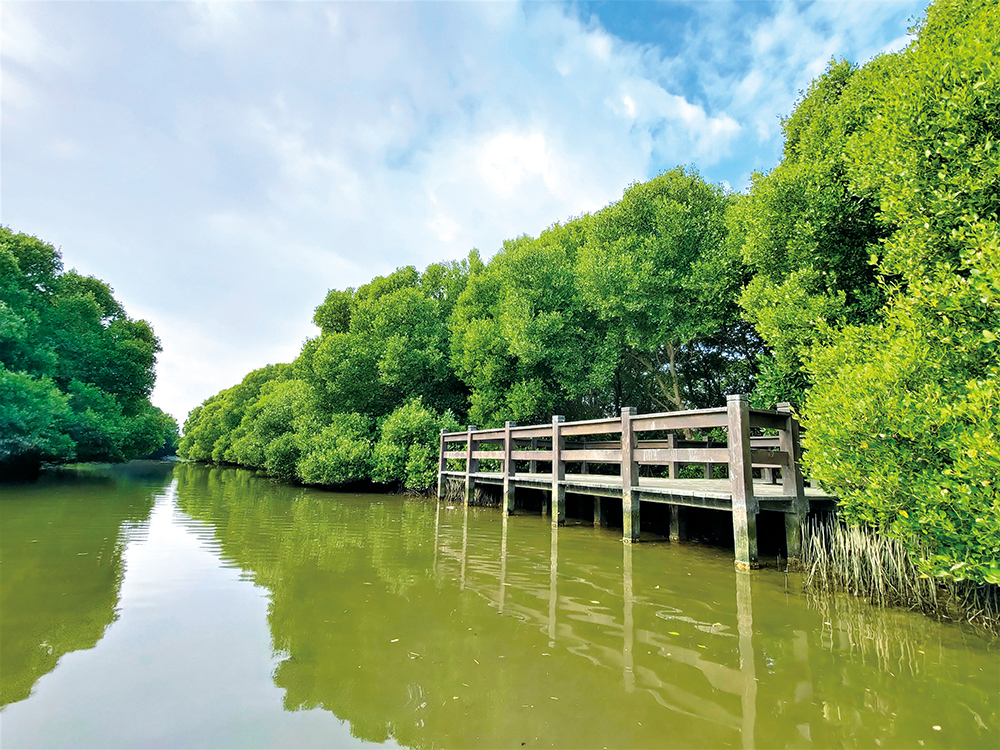
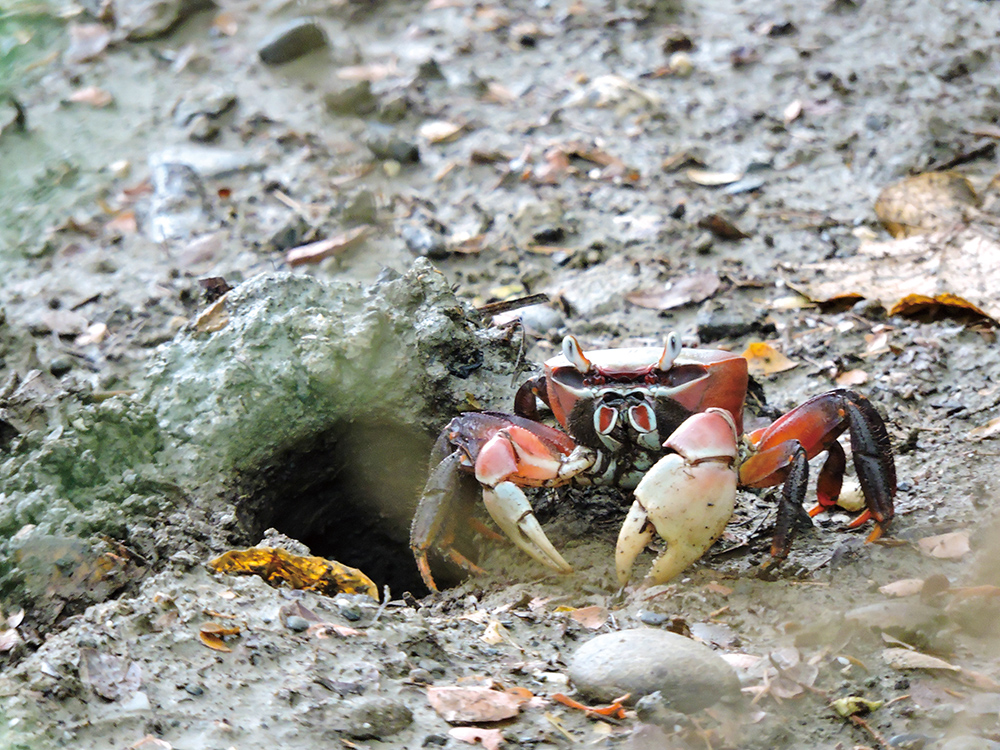
During high tide at night in the summer, people can witness the annual migration of female Brown Land Crabs(凶狠圓軸蟹)carrying their eggs to the sea. It occurs at Yuanjhong Harbor Wetland(援中港濕地), where they emerge from the mangroves and grassy undergrowth. They then cross the road and head to the ocean, where they release their larvae. For these female land crabs, this seemingly short journey is, in fact, a life-or-death challenge.
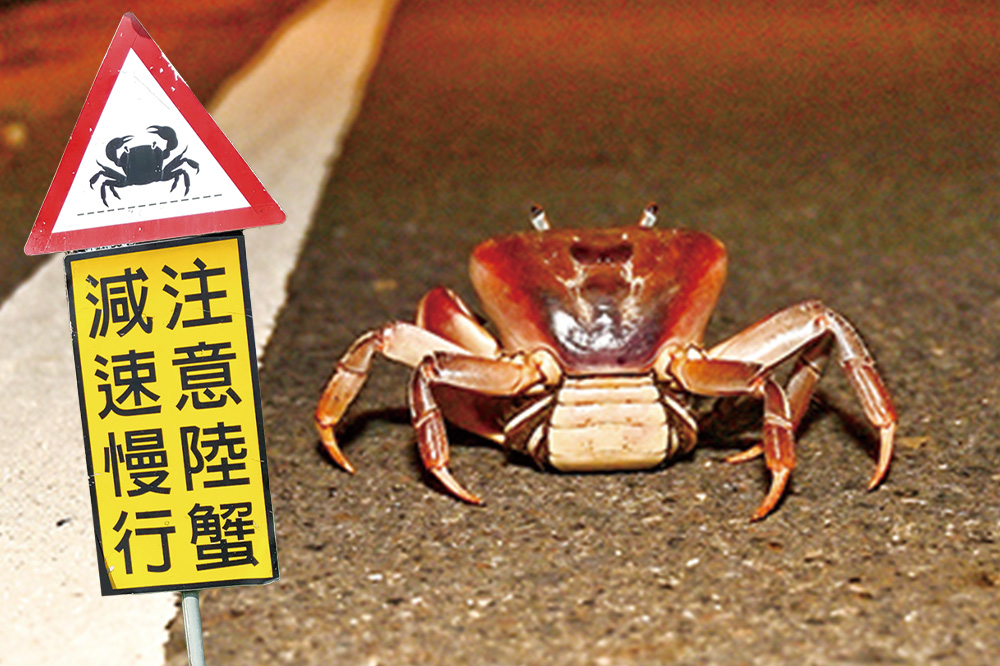
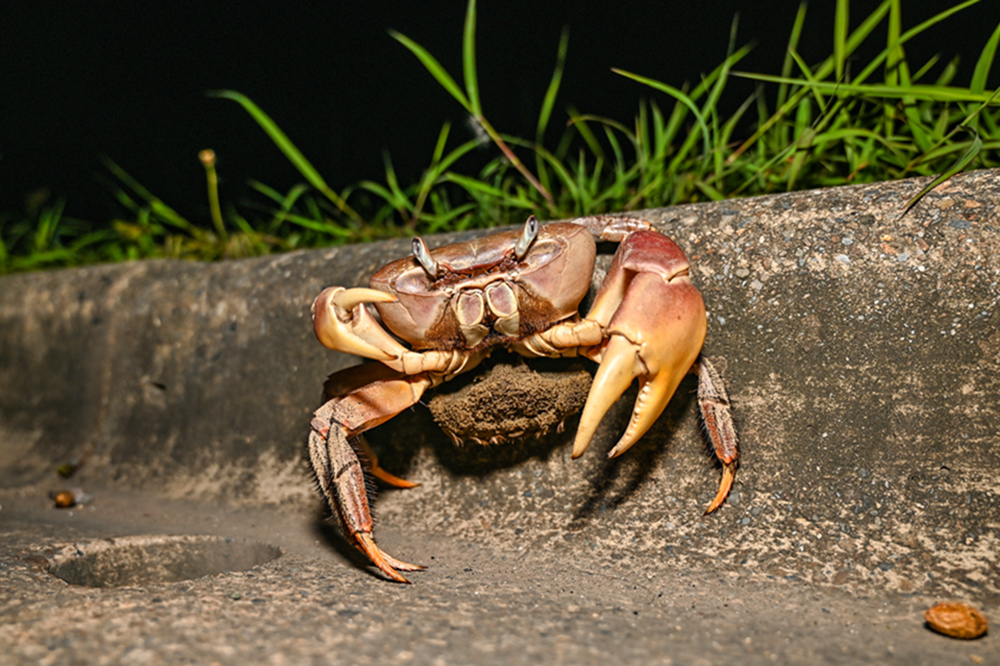
Named for its pair of large, powerful claws, the Brown Land Crab is one of Taiwan's largest terrestrial crab species. According to Andrew, Executive Secretary of Wetlands Taiwan(台灣濕地保護聯盟), the crabs spend most of their lives on land, but their young depend on the ocean to develop. Each year, during the breeding season from May to October, female crabs carry tens of thousands of zoea larvae and time their release to coincide with high tide, allowing the larvae to disperse into the sea. When the larvae develop into the megalopa stage, the young crabs return to land, completing their life cycle.
However, roads now run through these wetlands and along the coasts, posing a tremendous risk. Mother crabs face being crushed by passing vehicles, trapped in roadside litter, or even captured by fishermen who use them as bait. What appears to humans as a short stretch of road is, for these land crabs, a perilous migration in which survival hangs in the balance.
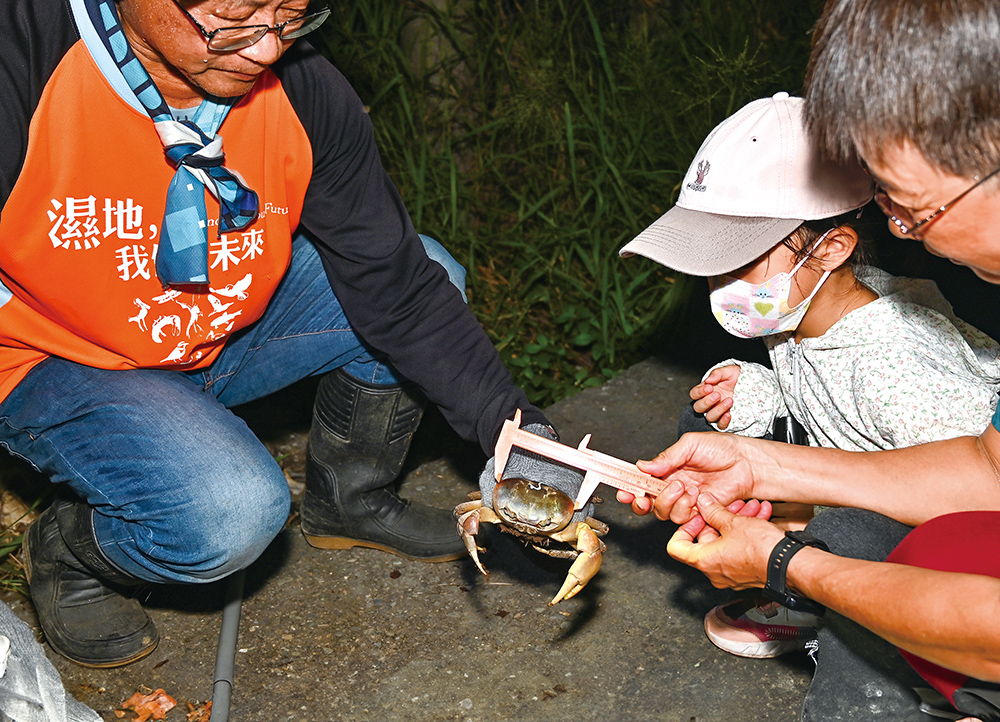
To reduce these threats, Wetlands Taiwan organizes beach cleanups before the breeding season and increases nighttime patrols during the migration period. Volunteers help ensure that mother crabs can safely complete their remarkable journey to the sea and successfully release their next generation.
援中港夏夜護蟹行 「蟹」謝守護回家的路
文/蔡蜜綺
夏夜大潮湧起,援中港濕地迎來一年一度的生命遷徙。抱卵的凶狠圓軸蟹媽媽從紅樹林與草叢間現身,穿越道路、奔向大海,只為完成「降海釋幼」,孕育下一代。然而,這段看似短暫的旅程,卻是一場攸關生死的考驗。
名字霸氣的凶狠圓軸蟹,是臺灣體型最大的陸蟹之一,因一對粗壯大螯而得名。社團法人台灣濕地保護聯盟執行祕書Andrew表示,牠們多數時間生活於陸地,但幼體成長卻必須仰賴海洋。每年五至十月繁殖季,母蟹便會帶著數以萬計、即將破卵的蚤狀幼體前往海邊,再利用海浪拍打或擺動身體,將幼體釋放到海中,待蛻變成大眼幼體後,再重新登陸,完成生命循環。
然而,都市開發讓濕地與海岸被道路阻隔。繁殖期間,蟹媽媽必須冒險穿越道路,途中可能遭遇車輛輾壓,或受困於沿途的垃圾,甚至被捕捉作為釣餌。對人類而言,這只是一段短短的道路;對陸蟹而言,卻是一場攸關生死的遷徙。
為降低傷亡,台灣濕地保護聯盟每年繁殖季前舉辦淨灘,並加強夜間巡護,陪伴蟹媽媽平安完成「降海釋幼」的生命旅程。