發布日期:2026-10-20更新日期:2026-10-19
Exploring Houjin in Transformation
Formerly a major center of Taiwan's petrochemical industry, Houjin in Kaohsiung's Nanzih District is quietly reinventing itself amid industrial transformation. Led by Lin Cai-jheng(林財正), an instructor at North Kaohsiung Community University(北高雄社區大學), we embark on a walking tour along the middle and lower reaches of Houjin Creek(後勁溪), exploring the collective memories of communities connected by its waters.
The journey traces the migration of the Takaraian community of the Makatao people, a lowland Austronesian indigenous ethnic group, alongside the arrival and settlement of Han Chinese immigrants during the Kingdom of Tungning (sometimes referred to as the Ming-Zheng Period) and the subsequent Qing era. It also highlights the creek's role during Japanese rule (1895–1945) as the primary source of irrigation for the farmlands of Ciaotou and Houjin.
We see the place where environmental awareness and the movement against the Fifth Naphtha Cracker emerged, before experiencing the revitalized ecological green corridor that was conjured into existence after the waterway's restoration.
Early in the morning, we begin with breakfast at Hongyi Market(宏毅市場), located beside the oil refinery's staff dormitories. We then continue toward what longtime residents call the “CPC Department Store” and its long red-brick wall. CPC Corporation, Taiwan is the country's state-owned petroleum, natural gas, and gasoline company.
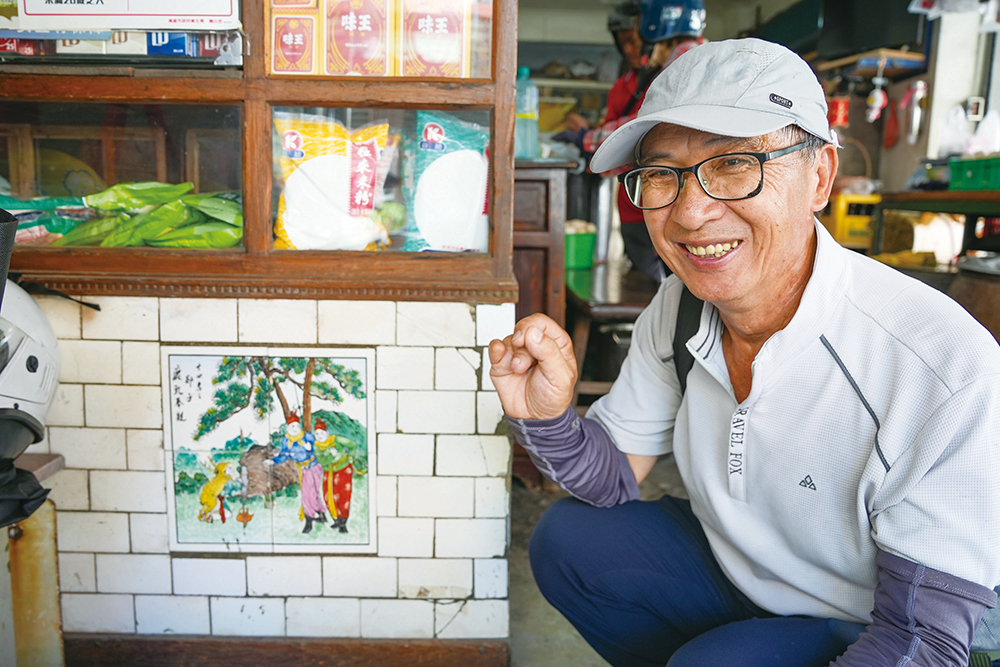
Hidden within the neighborhood's narrow lanes, an old anti-aircraft gun emplacement recalls the wartime history of the colonial-era Imperial Japanese Navy's Sixth Fuel Plant(日本第六海軍燃料廠). This facility was the predecessor of the CPC oil refinery.
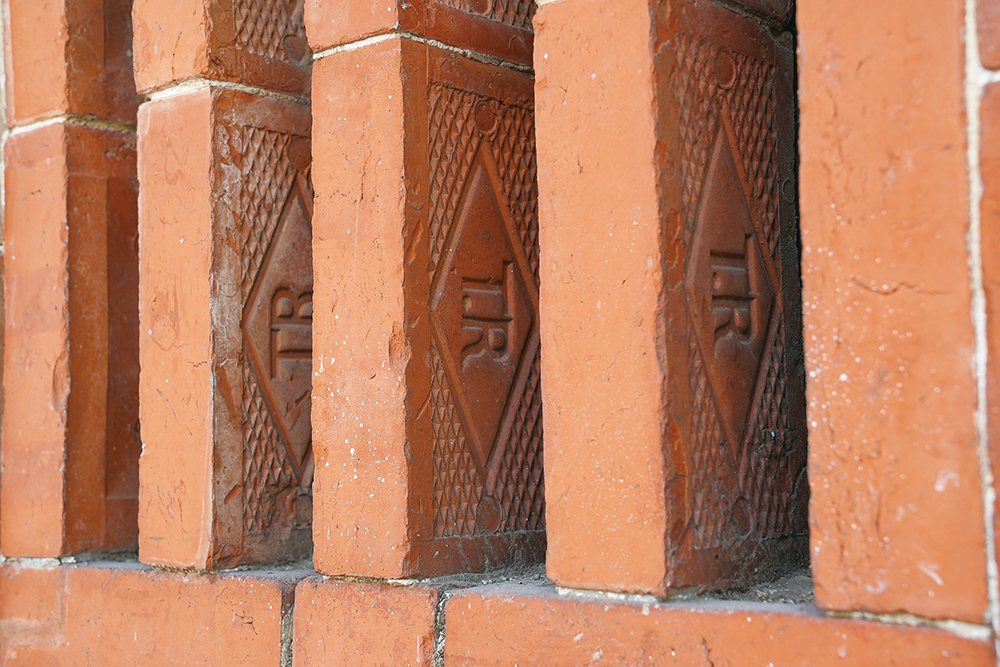
Next, we explore the old settlement's traditional “bagua,” or Eight Trigrams, layout, with its winding alleyways designed to be easy to enter but difficult to navigate. Along one of these alleys stands the historic Chen family residence, whose brick walls and brightly colored Cochin ceramic tiles reflect the family's former prosperity. We then visit the historic Lin Hui-an residence(林惠安古厝), where bat motifs symbolizing good fortune adorn the red-brick walls, preserving the warmth and character of a bygone era.
At a bend in the creek once stood two pumping stations. Known locally as “faucets,” these drew water to irrigate nearby farmland. The pumping facility on the Houjin side has been retired, while the one in Jioujiawei continues to support local agriculture.
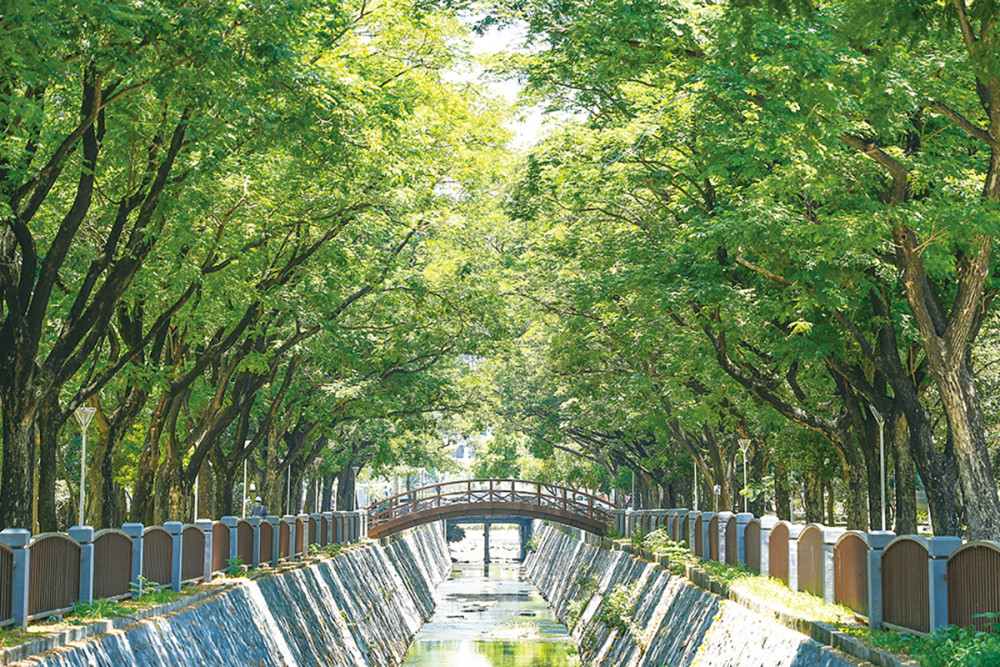
The tour concludes with a taste of CPC popsicles at the Houjin Food Shop, followed by a leisurely walk through the rain-tree tunnel that has replaced the former Youchang drainage channel. Along this picturesque waterfront, visitors can experience Houjin Creek's graceful new post-restoration chapter.
探訪蛻變中的後勁
文/李曉萍
曾為石化產業重鎮的後勁,在產業轉型後正悄然蛻變。跟著北高雄社區大學林財正講師,沿後勁溪中下游展開走讀,尋訪溪流串起的聚落記憶,從平埔族馬卡道塔加里揚社的遷徙、明鄭及清領時期的漢人移民屯墾,到日治時期灌溉橋頭、後勁農田的母河;從見證反五輕運動的環境啟蒙地,再到整治後重生的生態綠廊。
一早先到煉油廠宿舍旁的宏毅市場享用早點,再往老居民口中的「中油百貨」與長紅磚牆,巷弄內古老的防空砲台述說著日治時期「日本第六海軍燃料廠(中油煉油廠前身)」歷經的戰時歲月。
接著探訪傳統「八卦」佈局、蜿蜒且易進難出的舊部落巷弄,小巷裡陳家古厝映入眼簾,磚牆與色彩絢麗的交趾陶花磚反映家族富庶;再走至林惠安古厝,紅磚牆上留有福氣蝙蝠圖騰,定格歲月溫度。
轉至河道彎處,曾有兩座被稱為水龍頭的唧筒場,過去用以抽水灌溉,後勁一側已功成身退,而九甲圍的抽水設施仍為農業服務。
尾聲到後勁食品部品嚐中油冰棒,最後漫步於右昌大排轉變而成的雨豆樹綠色隧道,在風光明媚的水岸邊,感受後勁溪經整治後優雅蛻變的新篇章。